Future-Proofing Data: Holographic Storage in Kubernetes

In the world of handling lots of data, something really cool caught my eye - the idea of mixing Kubernetes with holographic storage (fancy way to store lots of stuff in a small space).
Imagine if data wasn't just kept on drives but in these cool hologram-like things - holographic storage is like that! And Kubernetes, it's the maestro making sure all this data plays nice together.
This mix-up sounds like it could solve a big problem - how to stash a crazy amount of data. It hints at a fresh way, not the usual, where data lives in these holographic worlds (I have to explore the multiversal concept after MCU tried, duhh!).
But there's a catch - it's tricky. Getting these holograms to work with Kubernetes' system is like fitting pieces in a puzzle :'( We need smart solutions and a bit of trial and error. It's a mystery that needs cracking :D But I have an unique solution for this, NGL :)
So, greetings to the readers of my blog :) Let's explore this adventure together. I intend to check out a future where Kubernetes and holographic storage team up, opening doors for data that goes beyond what we know, where we find answers to storing data in smarter ways. Otherwise, it will be a fun read, I promise xD.
# Understanding Kubernetes
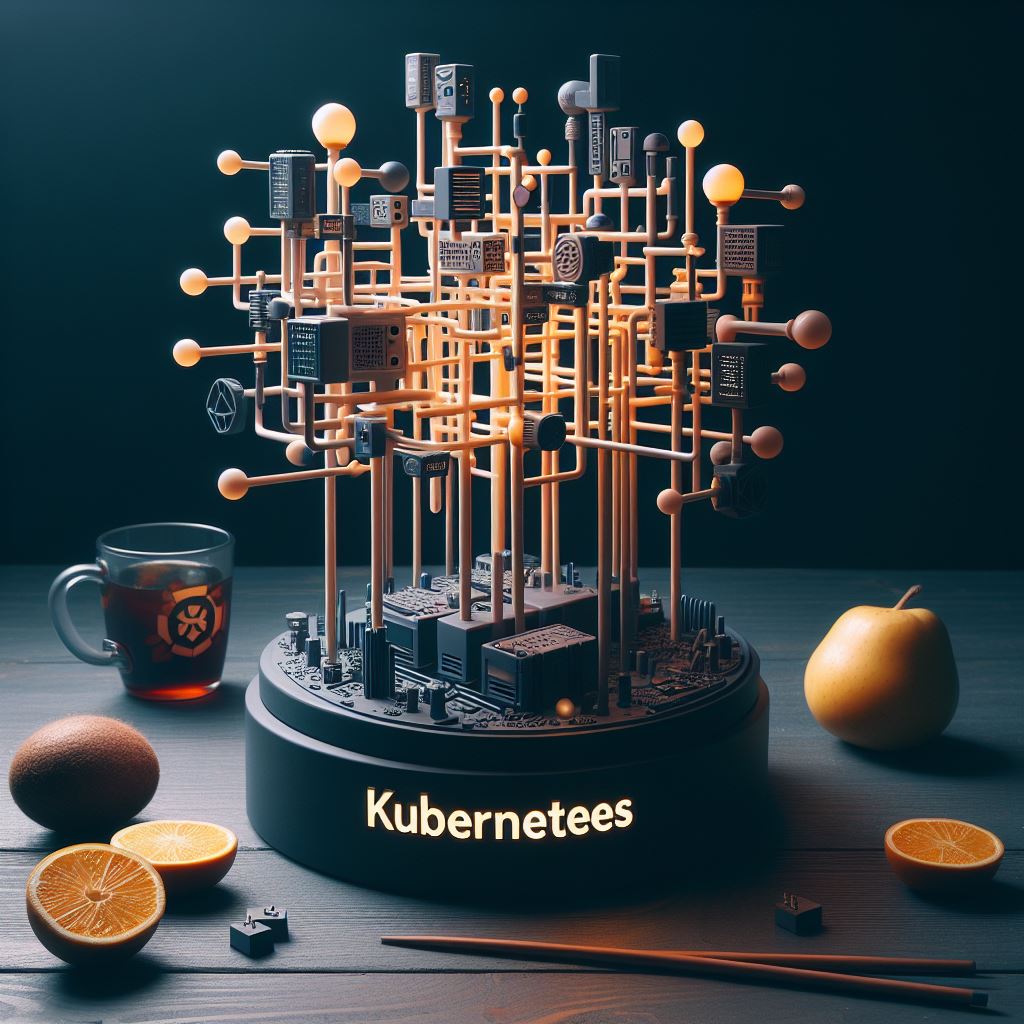
Think of Kubernetes as an organizer, for your applications. It's like having an assistant that seamlessly coordinates your apps on your computer or phone.
So what is Kubernetes? It acts as the behind the scenes hero, like John Favreau in the Marvel Cinematic Universe (Happy <3). It knows where each app should be, like a traffic controller managing cars on a bustling street. Its role is to ensure that each app has everything it needs while preventing any interference between them.
Now you might wonder why Kubernetes is significant and why you should use it. Well picture your apps being haphazardly scattered like toys over the floor. That's where Kubernetes steps in - it organizes everything neatly guaranteeing operation so that you can enjoy using your devices without any disruptions.
To put it simply Kubernetes acts as the conductor of an orchestra ensuring that all instruments play harmoniously - except, in this case it's your apps!
# Holographic Data Storage Basics

Holographic data storage is a means of storing so much loads of information with the aid of light and special materials. It does not store the data on a flat surface, as in the case of a hard drive, rather it uses lasers to store information throughout a material but this time in 3D, kind of like those 3D movies but for data.
This is the working procedure:
-
Saving Data: Every time saving is made, through holography, lasers are divided into two beams. One beam will carry the info that we want to save and the other will help in making a pattern inside this specific material.
-
Storing in 3D: Unlike the regular storage that writes on a surface, holographic storage writes data everywhere inside the material. It's writing a story in every page and in every corner of the book.
-
Getting Data Back: To read what's stored, we use another laser beam. It shows the stored info, and we can get it back.
Holographic storage saves a lot of info in a small space. Just think of having a tiny crystal, but holding an entire library!
It uses the concepts as:
-
Light Patterns: Fancy patterns created by light when they meet, used to save data.
-
Large Data in Small Space: It can store huge info in a small thing.
-
Special Materials: These materials are very sensitive towards the light and help save the data.
Though being still worked on, holographic storage may change the way we save and use big amounts of info sometime in the future!
# Challenges in Integrating Holographic Storage with Kubernetes
Whilst there is potential, combining storage with Kubernetes will have challenges that needs to be addressed for its smooth integration;
-
Complexity of Compatibility: Kubernetes is designed to work with 'storage systems like drives or cloud storage'. However configuring a technology like Holographic Storage needs modifying Kubernetes to understand and manage this unique way of storage.
This pseudo Go code attempts to configure a Kubernetes Pod to use holographic storage. It mimics the process of applying this configuration to the Kubernetes cluster.
package main import ( "fmt" ) var podConfig = map[string]interface{}{ "metadata": map[string]interface{}{ "name": "example-pod", "labels": map[string]string{ "app": "example-app", }, }, "spec": map[string]interface{}{ "containers": []map[string]interface{}{ { "name": "example-container", "image": "nginx", "volumeMounts": []map[string]string{ { "mountPath": "/data", "name": "holographic-storage", }, }, }, }, "volumes": []map[string]interface{}{ { "name": "holographic-storage", "holographicStorage": map[string]string{ "type": "holographic", "size": "10Gi", "speed": "high", }, }, }, }, } func applyPodConfiguration(config map[string]interface{}) error { return fmt.Errorf("Integration Error: Unknown problem integrating holographic storage with Kubernetes") } func main() { err := applyPodConfiguration(podConfig) if err != nil { fmt.Println(err. Error()) } } -
Data Handling Differences: Kubernetes makes assumptions on and behaviors with respect to data handling when it comes to the storage system. In light of the fact that holographic storage is a new emerging technology there might be some misalignments between this tech and what Kubernetes assumes thereby making it difficult to access and retrieve data.
-
Resource Allocation: Kubernetes will, when accessed, allocate resources like memory and processing power on gathered assumptions on how storage behaves. But holographic storage has their own special way to store and access data that may have different resource allocations that might not be readily provided by Kubernetes.
-
Security Concerns: Integrating storage technology involves addressing multiple security challenges. All related issues pertaining to holographic storage within Kubernetes should ensure that the remained secured from possible challenges and threats from native integration.
-
Testing: Coordination needs to be maintained in a way between Kubernetes and holographic storage such that it does not have any impact on the existing functionalities that are present either in Kubernetes or the connected systems.
-
Adoption and support to the community: It may take some time and effort for the Kubernetes community to be convinced on storage integration benefits and reliability.
# Solutions and Innovations

-
Adapting Kubernetes Volume Plugins: Developers are contemplating customizations of the volume plugins through which they can figure out how to modify them to fit holographic storage in realizing integration seamlessly. Customizing volume plugins that function on holographic storage systems is what will make developers be able to bridge the gap between the native storage options offered by volumes with respect to Kubernetes and the unique demands presented by holographic storage.
-
Holographic Storage Drivers: Specialized Kubernetes drivers that take into account the holographic storage complexity is one factor that makes a difference. It offers a mediation layer that translates standard Kubernetes storage operations into inferences that holographic storage systems can understand so that Kubernetes can interact effectively with the data repositories.
-
Dynamic Provisioning Enhancements: The native dynamic provisioning mechanisms of Kubernetes need to be developed further so that it can avail the same set of functionalities towards a holographic storage backend so that Kubernetes eases the dynamic provisioning of holographic storage resources and, along with it, allocation and management of holographic storage volumes efficiently.
-
API Development Standard: Standardizing APIs for holographic storage systems would further help in the seamless integration of these systems into Kubernetes. Standard APIs facilitate Kubernetes to interact with different holographic storage solutions almost similarly, thus making the integration a standardized process itself.
-
Holographic Storage: Custom Resource Definitions (CRDs) Developers will be able to define custom specification objects using the CRDs of Kubernetes to manage holographic storage resources within a Kubernetes environment. The CRDs, which are specific to holographic storage and were extended to the Kubernetes API, will allow treating holographic storage entities as native Kubernetes resources.
# Technical Considerations

# 🚀 NGINX as Ingress Controller in Kubernetes for Holographic Data Storage.
So, what will we be doing here ? :-> We will be integrating NGINX with Kubernetes in the context of holographic data storage which will involve using NGINX as an Ingress Controller to manage incoming traffic and route it to various services or applications within the Kubernetes cluster :)
So, the steps are as follows :
- Deploying NGINX Ingress Controller
Firstly, we'll deploy NGINX as an Ingress Controller in your Kubernetes cluster using its dedicated manifest file. Below is an example manifest (nginx-ingress.yaml) to deploy NGINX Ingress Controller:
apiVersion: apps/v1
kind: Deployment
metadata:
  name: nginx-ingress-controller
  namespace: ingress-nginx
spec:
  replicas: 1
  selector:
    matchLabels:
      app: nginx-ingress
  template:
    metadata:
      labels:
        app: nginx-ingress
    spec:
      containers:
        - name: nginx-ingress-controller
          image: nginx/nginx-ingress:latest
          ports:
            - name: http
              containerPort: 80
            - name: https
              containerPort: 443
If you want to add any additional configurations for NGINX Ingress Controller, that can be added at the below. This YAML file deploys the NGINX Ingress Controller in the (ingress-nginx) namespace, listening on ports 80 (HTTP) and 443 (HTTPS).
- Creating Ingress Resource
Next, we will create an Ingress resource to define how incoming requests should be handled by the NGINX Ingress Controller. Here's an example Ingress manifest (example-ingress.yaml):
apiVersion: networking.k8s.io/v1
kind: Ingress
metadata:
  name: holographic-ingress
  namespace: default
  annotations:
    nginx.ingress.kubernetes.io/rewrite-target: /
spec:
  rules:
    - host: holographic.example.com
      http:
        paths:
          - path: /data
            pathType: Prefix
            backend:
              service:
                name: holographic-service
                port:
                  number: 80
In this configuration, the Ingress resource (holographic-ingress) specifies that requests coming for (holographic.example.com/data) should be directed to the (holographic-service) running in the (default) namespace on port 80.
-
Applying the Configurations
  kubectl apply -f nginx-ingress.yaml
  kubectl apply -f example-ingress.yaml
This sets up NGINX as the Ingress Controller within your Kubernetes cluster to manage incoming traffic related to holographic data storage. Requests coming to (holographic.example.com/data) will be routed to the specified service.
If you want to use and implement this example, you are requested to adjust the hostnames, paths, and service names according to your specific environment and requirements.
# Conclusion

Indeed, as can be seen in an exploration of how holographic data storage could be integrated within Kubernetes, nothing is clear - conceptually very promising without real-world production workloads yet to showcase. The conceptual strength of using holographic storage within Kubernetes for long-term and high-densification of data storage and retrieval does, after all, have problems of its own.
It is true that the actual realization and adoption of holographic data storage within Kubernetes for such purpose is now more speculation than proven. The technology itself is very incipient, with few tangible use cases in live production environments. This means that the conclusive outcomes, performance metrics, or industry-standard practices of how holographic storage can be smoothly employed at large in Kubernetes could still be in the development phase.
Although the theoretical advantages of holographic storage for hosting massive dataset in high compact and capacity medium is irresistible, however narrowing down its practical procedures within Kubernetes robust but complex virtuoso orchestrations make it look more like a complicated puzzle.
For now this holographical data storage - Kubernetes would remain only as a promising concept at the horizon calling to further explore, research and innovative endeavors in said area. The journey to its practical realization needs efforts, extensive testing, and refinement which will pave the way for a future where holographic storage effortlessly integrates with Kubernetes revolutionizing data storage landscapes.
# Previous Articles

-
Future-Proofing Data ? Using Holographic Data Storage in Kubernetes for Long-Term & High-Density Storage and Retrieval
-
Quantum Cryptography Protocols: Exploring Beyond Quantum Key Distribution
-
Exploring the Rising World of Biohacking: Enhancing Human Abilities through Technology
If you want to contact me, feel free to drop an e-mail at [email protected] or check out my website at adityaseth.in :)
Also, here’s my LinkedIn.Thank you everyone for reading,
Over and out,
Aditya Seth.
Frequently asked
- What is holographic data storage?
- A storage method that uses lasers to write data in three dimensions throughout a light-sensitive material, rather than on a flat surface like a hard drive, allowing very high data density in a small physical volume.
- Is holographic storage actually integrated with Kubernetes today?
- No - the post is explicit that this is a speculative, conceptual exploration. Holographic storage has few production use cases, and no proven performance metrics or standard practices yet exist for using it as a Kubernetes storage backend.
- What Kubernetes primitives would need to change to support holographic storage?
- The post points to volume plugins, storage drivers, dynamic provisioning, and Custom Resource Definitions (CRDs) as the areas that would need holographic-storage-aware implementations for Kubernetes to treat it as a native storage class.
- What challenges stand in the way of this integration?
- Compatibility with Kubernetes' existing storage assumptions, differing resource-allocation behavior, security review of a novel storage medium, and the general immaturity of holographic storage technology outside research settings.
Comments